

Have you ever wondered why 70% of internet traffic goes through Northern Virginia? So did Jonathan Low, and in 2016, he took a road trip to map data centers and came to realize the back bone of the internet was concentrated between Dulles and Ronald Reagan airports. The area has traditionally been home to major intelligence agencies and federal government communications nodes. For instance, an array of early microwave towers was created in the region in 1952.
Later government agencies and contractors were joined by the likes of MCI, AOL, and UUNet. I actually paid a sales call to one of the sprawling AOL campuses in the early 2000s. Today, Amazon Web Services (AWS) has established a myriad of data centers and parks that dominate the IT landscape of the region. The Bay Area may have been home to innovations that led to the internet and digital age, but it is Northern Virginia where the internet was commercialized.
In his book, From Tysons Corner to Internet Alley, Paul Ceruzzi described how the companies that populate this corridor have created an “Internet Alley” off the Washington Beltway that is today one of the most prosperous regions of the country. MAE-East, initially housed in a parking garage, was one of the world’s earliest internet exchange points. This triggered a network effect that expanded rapidly, built on generous National Science Foundation grants, fiber, and homegrown technical talent.
Tragically, much of that homegrown talent in the region’s commercial sector is competing with foreign workers here on temporary work visas and/or work authorizations. Understand, foreigners didn’t drive the growth of the region. It was driven by the National Science Foundation and the defense contracting talent indigenous to the region and again, not imported labor.

In 2021 and 2022, Amazon was the first or second largest private-sector hirer of science, technology, engineering, and math (STEM) Optional Practical Training (OPT) workers from major Virginia public colleges, including Virginia Tech, the University of Virginia, and William and Mary.
To understand how we got here, it helps to know that STEM OPT wasn’t a law passed by Congress. It was created through rulemaking in what is probably the greatest case of agency deference in our country’s history. Bill Gates, smarting from not being able to get Congress to increase the number of H-1Bs, in 2008, colluded with DHS Secretary Michael Chertoff to create a program that would allow any foreign student at any U.S. college to work in a STEM-related job for 29 months after graduation. Later, the Obama administration later stretched that to 36 months. Again, without a single vote in Congress. What makes the program even more egregious is that there is no cap on how many STEM OPT work authorizations can be issued, and like the H-1B, there’s no requirement that an employer even try to find an American first. Then to add insult to injury, employers also get a built-in incentive to prefer STEM OPT hires. You see, they’re exempt from paying Social Security and Medicare taxes on these workers, a roughly 15% discount over hiring an American in the same role.
The “labor shortage” story doesn’t hold up against the numbers. Given only 28% of STEM majors actually end up working in a STEM job, and only about half of trained engineers work as engineers, it’s obvious our labor market is experiencing a major malfunction.
In 2022 alone, 685,000 U.S. citizens and permanent residents graduated with STEM degrees—that is 87% of all STEM degree holders that year. Moreover, 90% of computer science and engineering bachelor’s grads were Americans. Meanwhile, 1.45 million U.S.-born STEM degree holders were unemployed or out of the labor force, including 438,000 engineers and 243,000 IT workers.
Recent computer engineering graduates face a 7.5% unemployment and 17% underemployment rate; for computer science grads it’s 6.1% and 16.5%.
All this at a time when the foreign-born STEM workforce doubled since 2010, and total compensation for STEM workers rose just 2% between 2008 and 2023. Labor, much like capital, is not immune from the laws of supply and demand. If you increase the supply of labor, you consequently lower the demand. Hence, it is a wage-suppression story hiding in plain sight.
Nationwide, STEM OPT added 872,516 foreign STEM workers to our labor market between the Class of 2010 and the Class of 2022. Of that number, 336,961 worked in computer science and 331,044 in engineering. Each one of these jobs should have gone to American graduates.
In 2022, 220,000 STEM OPT workers were active in the U.S., and the program adds roughly 85,000 more every year. Understand, there is essentially no meaningful oversight, as the DHS office responsible for monitoring it, the Student and Exchange Visitor Program, is too understaffed to review the thousands of universities and employers in the system.
The Virginia Story
Virginia’s numbers closely track the national pattern. Between the Class of 2008 and the Class of 2022, Virginia colleges produced 22,251 foreign STEM OPT workers, with 6,738 of those taking jobs in engineering and 8,064 in computer science and math. According to the Institute for Progress, in 2022, 8,768 STEM OPT workers were employed in the state, with many having received scholarships, on-campus jobs, and federal research funding in the form of grants along the way. YOUR TAX DOLLARS AT WORK! Then after graduation from the same public universities such as George Mason and UVA, the graduate got private sector jobs.
The university-level numbers are the starkest part of the story. Virginia Tech graduated 455 foreign nationals with computer science or math master’s degrees between 2008 and 2022; 343 of them, or 75%, landed a computer or math job right out of school via STEM OPT. George Mason graduated with 2,115 such students in the same window, and 1,916 of them, or 91%, also got jobs right after graduation. At UVA, 718 graduated, and 495, or 69%, got jobs that Americans should have been prioritized for. These aren’t students filling a gap nobody else could fill. They’re the default outcome of a system built to displace and discard American workers.
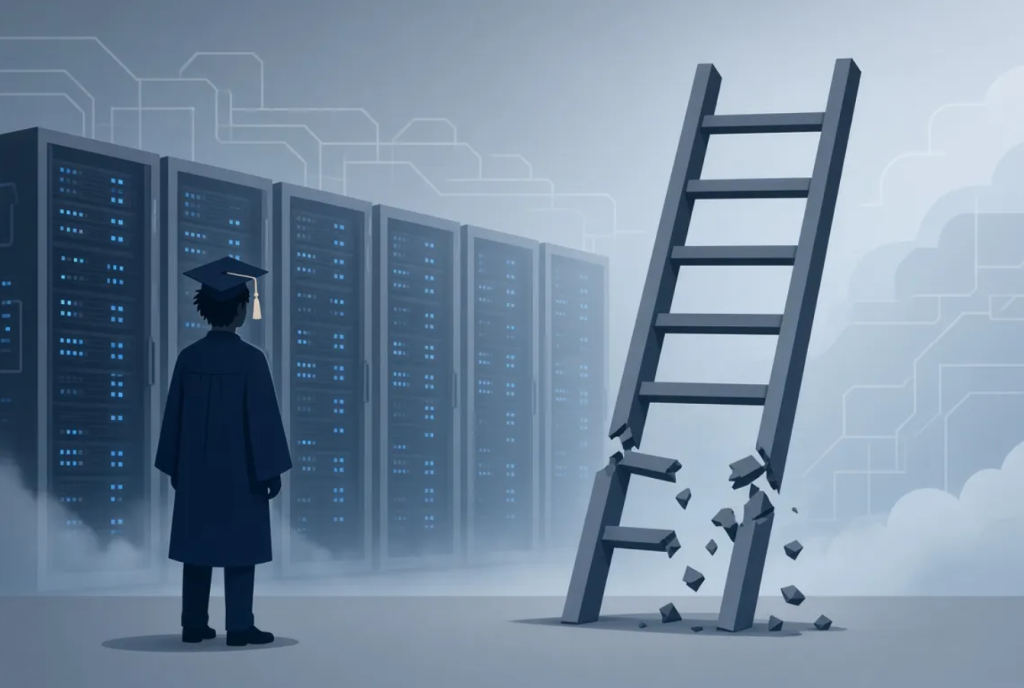
Virginia has long been a source of disruptive technologies that changed the world. For instance, Cyrus McCormick invented and commercialized his mechanical reaper way back in 1831. But that tradition of innovation is threatened by foreign labor. . . . STEM OPT is quite literally pulling out the bottom rung of the career ladder for our future STEM workers and throwing a wet blanket on what was a hotbed of innovation and inventiveness.
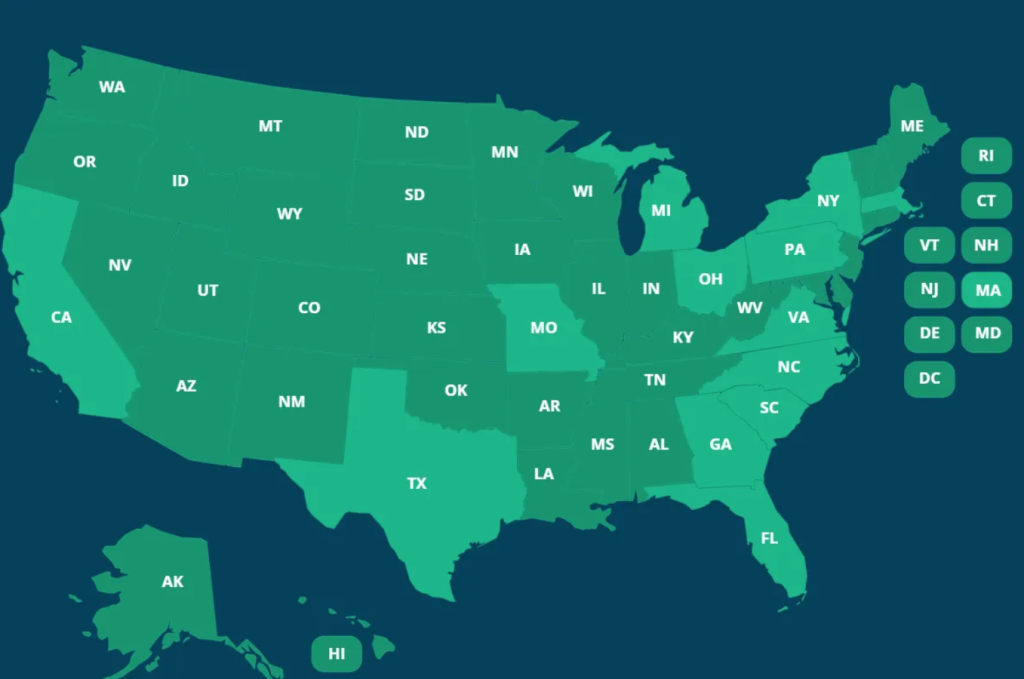
Join us in signing and sharing our petition to end STEM OPT. Find your state, click on it, sign the petition, and share it with your fellow students, neighbors, colleagues, parents, and alumni. Next year, we will deliver these petitions to each state’s congressional delegation.
If you do not see an active petition for your state, reach out to me at klynn@instituteforsoundpublicpolicy.org and we’ll discuss how you can start one in your state.

Visit us on Social Media:


USTW
IfSPP
