

On October 8, Vice President Vance stood at a podium with Labor Secretary Keith Sonderling and Attorney General Todd Blanche and said what American tech workers have waited years to hear. Companies are laying off Americans and replacing them with guest workers, he said, and it has to stop. Then the Labor Department suspended eight companies from the green card labor certification program, known as PERM: Microsoft, Adobe, Cognizant, Infosys, Tata, Wipro, HCL Technologies, and Capgemini.
We founded U.S. Tech Workers in 2018 as a way to bring attention to the impact employment visa programs such as H-1B were having on America’s white-collar professional workers. Not since that day in August 3, 2020, when I brought several Tennessee Valley Authority workers with me to DC to meet with President Trump, have I seen an administration use the bully pulpit to speak on the ills of the H-1B visa program. Vance called out outsourcing firms as well as large tech sector companies. He explained that an H-1B worker who loses their job must leave the country, and that makes the worker cheap and compliant. He invited both parties in Congress to fix the program. That deserves credit, and I give it gladly. It also deserves a follow-through equal to the rhetoric. The suspension is a strong opening move, but the outsourcing firms can absorb it. Here is why, and what I believe needs to come next.
Why PERM Suspensions Are Not Enough
There is an important distinction between the H-1B visa program and the employment-based green card process. When an employer hires a foreign worker through H-1B, it generally does not have to prove that it first attempted to recruit a qualified American worker. But when that same employer later sponsors the worker for permanent residency (green card) through PERM, it must conduct recruitment to establish that no able, willing, qualified, and available U.S. worker can fill the position. By then, the foreign worker may have occupied that very position for years, and the employer has every incentive to retain the employee it currently has in that seat.
There are many opportunities to manipulate this recruitment process, and we have observed and reported on how it happens. In a 2007 video of an immigration law seminar, attorneys at Cohen & Grigsby openly discussed strategies for satisfying PERM recruitment requirements while minimizing the chances of finding qualified American applicants. In 2021, the Department of Justice reached a settlement with Facebook over allegations that it discriminated against American workers in PERM recruitment. In 2023, Apple reached a settlement worth up to $25 million after DOJ found that its recruitment procedures disadvantaged eligible U.S. applicants. And in August 2026, the Department of Justice reached a $3.2 million settlement with OpenAI after investigators found that the company had discouraged American workers from applying for PERM positions. Their tactics included keeping job openings off public careers websites, requiring applicants to mail-in paper applications, and even advertising positions on late-night radio.
The H-1B program presents a different dilemma because employers face no comparable recruitment test in the first place. Additional recruitment and non-displacement obligations generally apply only to H-1B-dependent employers, and even those obligations have exemptions for workers earning at least $60,000 or possessing a qualifying master’s degree. Congress established that $60,000 threshold in 1998 and has never raised it. Much of what critics identify as “abuse” is therefore not necessarily illegal; it is permitted under the law as Congress designed it. Congress made it absolutely legal for companies to replace American workers with cheaper foreign workers.
The Outsourcing Firms Are Not As Affected
Vance was right to single out Indian IT outsourcing firms, but a PERM suspension lands lightest on companies whose business models depend primarily on temporary contract foreign workers and offshore service delivery rather than permanent residency sponsorship. These companies can continue filing otherwise permissible H-1B petitions, supplying workers to American clients and shifting technology work overseas. Their responses to the October 8 announcement demonstrate just how limited the immediate business consequences may be.
On October 9, Tata Consultancy Services announced that the suspension would not affect its workforce strategy or customer engagements, disclosing that it had filed fewer than 10 PERM applications over the preceding two years. Infosys followed with a similar statement, while HCL Technologies indicated that the suspension would have little impact on its operations. On October 13, Wipro also declared that it expected no material business consequences.
Four major Indian IT services firms targeted by the administration have now publicly indicated that these suspensions will barely affect their operations. India’s technology trade association, Nasscom, similarly emphasized that relatively few of its members’ H-1B workers pursue permanent residency through PERM. Reuters also reported that Indian companies accounted for less than 2% of PERM applications during fiscal year 2025.
Microsoft and Adobe are a different case. They rely more heavily on green card sponsorship to retain foreign employees, meaning a PERM suspension can have greater consequences for their long-term ability to attract and keep foreign workers. But when major outsourcing firms assure investors that their business operations will remain largely unaffected, Washington should recognize the limitation of this approach.
What Should Be Done Next

- Reform outdated PERM regulations and establish a national electronic PERM recruitment registry. DOL already requires employers to advertise PERM positions through state workforce agencies for at least 30 days, along with additional recruitment for professional positions. But, as mentioned earlier, the process remains fragmented and can be manipulated through obscure advertisements and inconvenient application procedures. PERM, as we know it today (which famously allows employers to count two print advertisements in Sunday newspapers of general circulation as an attempt at recruitment), was implemented via regulation on March 28, 2005 (as you can see above), more than twenty years ago. DOL is in the process of crafting a new regulation to reform PERM, which will be released later this year or next year. Newspaper advertising requirements should obviously be phased out. DOL should require every PERM position to appear on a centralized, publicly accessible digital platform for at least 30 days, with standardized job information and electronic résumé submissions. Additionally, employers should be mandated to post onto a third-party job board website, such as Indeed. Employers should maintain and disclose available records on valid reasons explaining why each American applicant was rejected. The 180-day six-month PERM freeze if a layoff does occur should be expanded to a year. Employers currently can get around the freeze by informing their laid-off workers of these jobs. However, employers should be mandated to interview laid-off employees for these jobs and disclose the reasons in documentation for why they are not rehired. Overall, for every PERM foreign worker hired, DOL should publicly disclose how many American citizens were rejected in the process and sort these American applicants into broad categories for rejection. Such a system would make recruitment easier to monitor and more transparent and allow DOL to analyze actual demand for workers.
- Revive the first Trump administration’s effort to hold H-1B client companies accountable. Following the August 2020 meeting with displaced TVA workers, President Trump signed an executive order directing DHS and DOL to examine the responsibilities of secondary employers using H-1B workers. In January 2021, DOL announced a policy under which a client company that qualified as a worker’s common-law employer would also be required to file its own H-1B petition and Labor Condition Application, even when an IT staffing firm had already done so. This would have placed direct immigration compliance obligations on American companies that exercised employer-like control over workers supplied by staffing firms.Unfortunately, the incoming Biden administration withdrew that guidance before it took effect. A separate DHS rule from October 2020, which imposed stricter third-party placement requirements, was struck down in federal court for bypassing the Administrative Procedure Act’s notice-and-comment requirements. The current administration should revisit these initiatives through coordinated rulemaking. DHS should address when qualifying client employers must file separate H-1B petitions, while DOL should address corresponding labor condition obligations. Both agencies must establish statutory authority, publish proposed regulations, solicit public comments, and address significant objections before finalizing the rules. Proper rulemaking would avoid the earlier procedural mistake, although any new requirements would still need to withstand challenges to their legal authority. DHS already has an H-1B reform proposal under White House review that could provide an opportunity to pursue this approach.
- Keep sensitive American data and critical services onshore. The other half of the outsourcing model is offshoring, which a PERM suspension does not touch. When banks, government agencies, and utilities contract out technology services, sensitive records and critical systems can become accessible to overseas personnel. In July 2025, ProPublica revealed that Microsoft used engineers in China to help maintain Defense Department cloud systems, supervised by American digital escorts who sometimes lacked sufficient technical expertise to evaluate their work. Microsoft subsequently ended the arrangement.
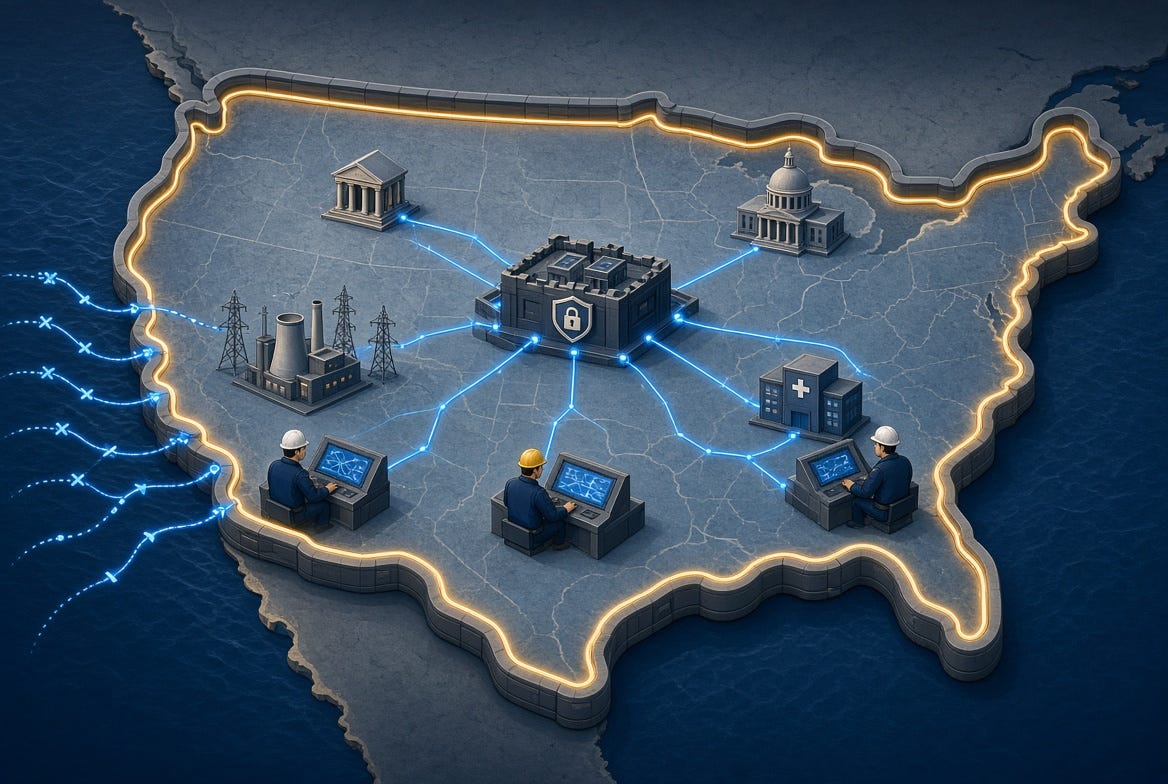
The federal government should establish stronger domestic-access requirements for sensitive government data and critical systems, with narrowly defined exceptions. Relevant financial and infrastructure regulators should consider comparable requirements within their authority, while Congress addresses areas requiring additional legislation. Protecting sensitive information would also reduce incentives to move certain technology functions overseas, reaching a part of the outsourcing business that visa restrictions cannot.

Conclusion
The vice president has opened the door to meaningful reform, but the administration must now move beyond green card suspensions and enact long-term regulations through rule-making. DOL should modernize PERM recruitment, DHS and DOL should revive the effort to hold qualifying secondary H-1B employers accountable, and federal agencies should strengthen safeguards against offshore access to sensitive American data. Congress should also take up Vance’s invitation to close the H-1B recruitment and non-displacement loopholes so that employers must genuinely consider qualified American workers before seeking foreign labor. The administration has shown it is willing to fight. Following our recommended guidance here is how it wins.
Visit us on Social Media:


USTW
IfSPP

