|
Dear {name}:
We launched U.S. Tech Workers in 2018 with the goal of challenging the well-funded and dominant narrative: that foreign guest workers drive American innovation and contrary opinions are anti-progress and unwelcome. Pushing back at the time engendered non-committal responses from congressional staff who were polite and skepticism from reporters. The policy debate solidly favored the employers, universities, and immigration lawyers who benefited from the pipeline of foreign white-collar workers.
We carefully and deliberately launched an advertising campaign in 2018 on the San Francisco Bay Area Rapid Transit in which the walls of two stations and 200 trains were plastered with posters stating U.S. TECH WORKERS Your companies think you are EXPENSIVE, UNDESERVING & EXPENDABLE Congress, fix H-1B law so companies must Seek & Hire U.S. Workers.
The campaign lasted two weeks sending shockwaves through Silicon Valley and the country. One of the first journalists to get a hold of me following the launch likened our ad to “rubbing steel wool on an open wound.” My total spend came to something just a bit north of $100K with 10X that in earned media.
We were hardly the first to see and expose the employment visa problem. In a book co-authored with Michelle Malkin, John Miano wrote the definitive tell-all on the H-1B, Sold Out. The late David North, A fellow at the Center for Immigration studies, and the late Professor Norm Matloff, had been writing for decades about the negative consequences of the H-1B. But we were the first to see it as a war being waged against America’s workers by a globalist managerial class looking to maximize profits and protect nascent tech monopolies at the expense of all else.
That was eight years ago. Now, for the first time we may be seeing light at the end of the tunnel.
To challenge that dominant narrative and frustrate our well-funded opponents, we used a variety of tools including activism, policy, and litigation. Political scientists described what we’ve been doing in their research. Paul Sabatier, who studied how policy actually changes, concluded that real shifts take a decade or more. Coalitions can spend years building evidence, testing arguments, and growing public awareness before anything appears to move. John Kingdon called this a “softening up” period, the long stretch when an idea goes from sounding radical to reasonable.
This is the war we have been waging. We’ve waged it through comment letters, state petition campaigns, labor market reports, lawsuits, activist events and countless meetings with staff who now ask us the questions we used to raise.
The same research describes what comes next. Frank Baumgartner and Bryan Jones found that policy areas stay frozen for long periods and then change suddenly when two things happen at once that include 1) the way an issue is framed shifts and 2) and the fight spreads to new venues where the old defenders lack control.
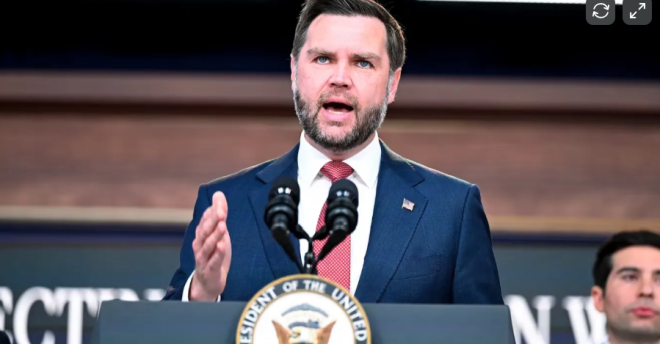
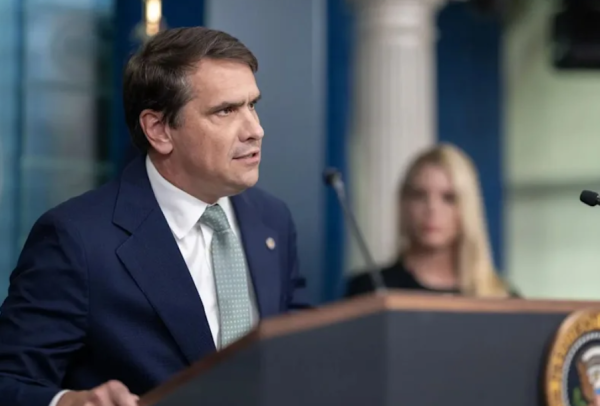
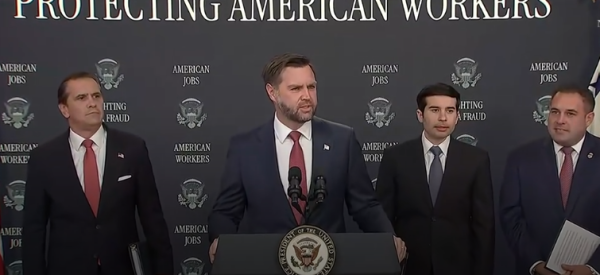
Both are happening now. President Trump’s war on the Deep State may be taking out key institutional opponents that blocked us in the past. The question is no longer do we need more immigration. It’s if employers should have to show they looked for American workers first. The PERM green card process already required a labor market test but that has been seriously abused. The H-1B program largely doesn’t require a test. Once people see these perversions, they can’t unsee it.
The venues who can’t unsee it are multiplying. This fight is no longer confined to a gridlocked immigration debate in Congress. It’s at the Department of Labor, which has suspended major employers from the PERM program. It’s in DHS rulemaking on H-1B fees. It’s in discrimination law, where our case against Boston Consulting Group drew a letter from thirteen members of Congress. It’s in federal contracting rules and in state capitals. A policy monopoly can defend one forum. It can’t defend all of them at once.
So we may be at exactly the right place in history. But need to be honest about the risks.
In 1972, the economist Anthony Downs came up with the notion of issue-attention cycle. Public alarm about a problem rises quickly, then fades once people realize real solutions carry real costs. Attention is not the same as change. Plenty of issues have dominated headlines for a season only to leave nothing behind.
There’s a second risk. Much of the recent progress has come through executive action: rules, proclamations, and enforcement decisions. These move fast, but they can be reversed just as fast by a future administration or thrown out by a bad judge. A genuine turning point is a change that survives a change in power.
That’s why our focus now is on durability. We want enforcement that becomes infrastructure, like restoring rigorous scrutiny of third-party staffing placements as standard practice instead of an occasional crackdown. We want statutory reform with sponsors from both parties. We want effective labor market tests written into law, not just into this year’s guidance.
Kingdon observed that when a policy window opens, it rewards the people who are already prepared, with proposals drafted and relationships built. After eight years, we are prepared and we are battle tested.
The window is open and it will eventually close. Our job is to make sure that when this one does, American workers are on the other side of it.
Onward,

Kevin Lynn
Executive Director, Institute for Sound Public Policy
Founder, U.S. Tech Workers
|