|
Dear {name}:
In his book Agendas, Alternatives, and Public Policies, political scientist John Kingdon wrote:
“We conceive of three process streams flowing through the system—streams of problems, policies, and politics. They are largely independent of one another, and each develops according to its own dynamics and rules. But at some critical junctures the three streams are joined, and the greatest policy changes grow out of that coupling of problems, policy proposals, and politics.”
Kingdon referred to these critical junctures as policy windows, and they should be watched for in much the same way the surfers I used to observe off the Malibu coast waited for just the right wave. The problem is that they are not predictable. But we know them when we see them, and this week, we saw one.
Several years ago, while protesting outside the White House, I ran into Dr. Doug Medina. Dr Medina was a graduate of Georgetown University School of Medicine who failed to match for a residency the year he graduated and in subsequent years. It was through him that I learned that, each year, roughly 1,300 recent graduates of U.S. medical schools fail to secure a residency position, while thousands of foreign-trained physicians match at U.S. teaching hospitals.
We created a project called Doctors Without Jobs, protested in front of the Association of American Medical Colleges, and walked the halls of Congress with unmatched doctors. I even testified before Congress on the issue.
In the end—crickets.
Yet the world seemed to turn on a dime in response to an X post by Nick Plumb, an engineer and resident of Houston, Texas, who began calling attention to the large number of foreign-trained physicians and the comparatively small number of U.S.-trained doctors in residency programs across the country.
The issue quickly attracted national attention, generating news coverage and prompting Department of Labor (DOL) Inspector General Anthony D'Esposito to publicly demand that Rochester Regional Health disclose how many residency positions went to H-1B and J-1 visa holders and how many American applicants received consideration. As one might expect, Rochester Regional Health responded by defending its recruitment practices and the qualifications and dedication of its physicians with a boilerplate response answering none of the questions raised.
It was good to see the influencer community piling on, and let's hope the response from DOL amounts to much more than a strongly worded letter.
Perhaps the Justice Department's (DOJ) Civil Rights Division should also examine whether any unlawful discrimination occurred. Given the allegations now being raised including questions about recruitment practices, visa sponsorship, and possible favoritism the facts deserve a serious investigation rather than assumptions in either direction.
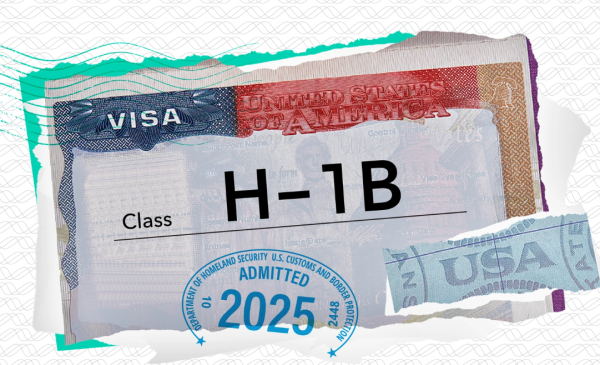
In related news, we filed our nine-page comment on the Department of Homeland Security's notice of proposed rulemaking titled “Fee for Certain H-1B Petitions.” We believe there is solid legal basis for raising fees in the proposed rule, and our comment offered specific recommendations for strengthening it and improving its ability to withstand legal challenges.
However, if this rule is finalized as is, opponents are likely to sue it into oblivion. That is precisely why the administration needs to carefully review every substantive criticism raised during the comment period, shore up weaknesses in the legal and factual record, and produce the most litigation-resistant final rule possible. Our comment lays out specific steps the agencies can take to strengthen the rule before it is finalized. Additionally, a strong administrative record with coordination between the DHS, DOL and DOJ developed before the rule is finalized will protect it from legal challenge under the Administrative Procedure Act.
With the midterm elections approaching and Republicans facing a competitive electoral environment, the administration is again putting H-1B front and center. This renewed attention is welcome and important because policy windows do not stay open forever. For organization like ours that has spent years submitting comments, documenting abuses, proposing reforms, and pressing agencies for action, this is the moment to judge the administration by what it actually delivers, and not merely by the rhetoric appearing on social media.
This rule, along with recent executive orders, agency initiatives, proclamations by the Vice President, and other proposed and recently published rule changes, indicates that we may be seeing the formation of the “big wave” Kingdon described—a moment when politics begins to converge with policy proposals and creates an opportunity for substantial policy change.
But the proof, as they say, will be in the pudding.
I think it is fitting to close with Galatians 6:9:
“Let us not be weary in well-doing: for in due season we shall reap, if we faint not.”
Onward,

Kevin Lynn
Executive Director, Institute for Sound Public Policy
Founder, U.S. Tech Workers
|