|
Dear {name}:
We spend a lot of time on social media, X in particular, and have a pretty good handle on what is capturing the attention of the online chattering classes. Immigration in any one of its various forms is almost always a topic du jour. Whether dealing with the consequences of the Biden administration’s open border policies, or the longer and less visible damage — a catabolic erosion driven by a spectrum of special interests ranging from chambers of commerce to ethnic lobbies across administrations of both parties, there is no shortage of opinions, facts, and commentary being churned out.
There are those who are waxing pessimistic about the prospects of being able to counter the impact of bad immigration policies, let alone turn things around in a way that will, to coin a phrase, “make America great again.” On the other hand, there are those who seem to view what the current administration is doing through rose-colored glasses. As with most complex matters, the truth is always somewhere in the middle, if it is to be found at all.
Reasons to be Optimistic:
· The border is all but sealed. Encounters along our southwest border were 9,991 in the month of December 2025. Contrast that to 301,981 in December 2024.
· The Trump administration’s “whole-of-government” approach to cracking down on visas, even if it isn’t making front page news, is making a dent in things. For instance, student visas issued to foreign students from India were down 60% between May and August of 2025. The National Foundation for American Policy projects legal immigration will fall by 33 to 50% over four years of Trump’s term, which is a fall of 1.5 to 2.3 million. That means 470,000 fewer refugees, 55,000 to 165,000 fewer diversity visas, and up to 1.7 million fewer family members (including brothers and sisters of naturalized U.S. citizens). The State Department has revoked 100,000 visas.
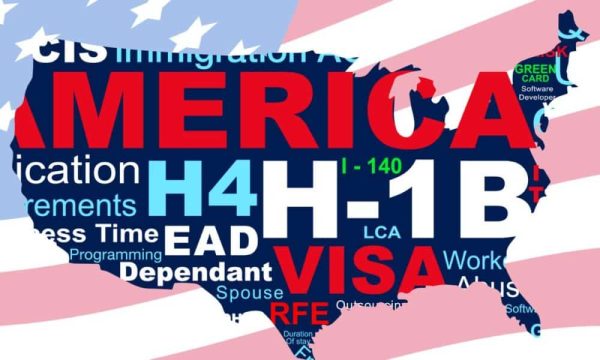
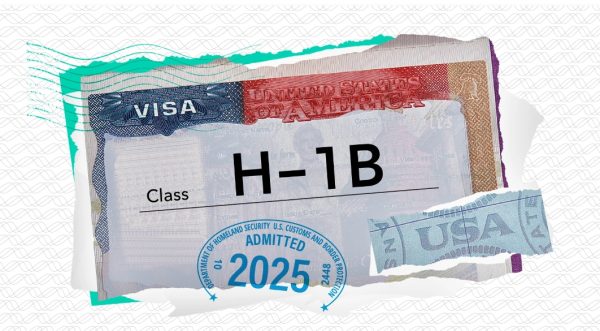
· In September 2025, Senator Jim Banks (R-IN) introduced the American Tech Workforce Act of 2026. If passed, this would end STEM OPT and rein in a number of H-1B visa abuses. In addition, there are several bills in the Senate and the House that will be introduced shortly that, if passed, will do a great deal to reform the H-1B visa program.
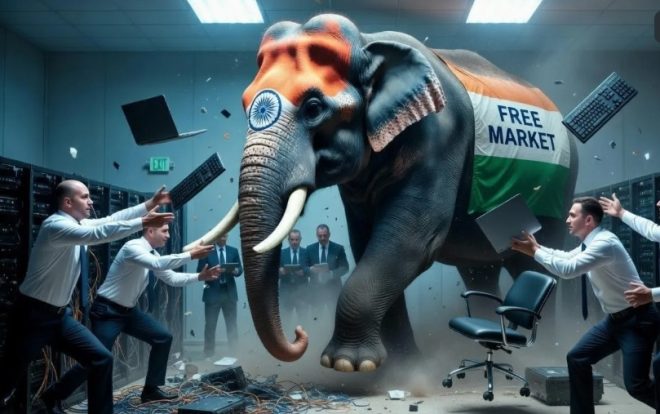
· Awareness is up. Unlike with the UK and European Union, when India was negotiating its bilateral trade agreement with the U.S., nowhere did it mention its workers.
Reasons to be Pessimistic:
· Anything good that has or could happen during the Trump administration can be wiped away by the next administration. The administration has not mastered the art of “rule-making,” a proven strategy that brings the bureaucracy to heel and embeds administrative changes that can impact policy for decades. For instance, in September 2025, the Department of Labor (DOL) unveiled Project Firewall with the stated goal of safeguarding the rights, wages, and job opportunities of highly skilled American workers by ensuring employers prioritize qualified Americans when hiring and holding employers accountable for H-1B visa abuses. It sounds good. But there have been no rule changes to date that would allow DOL to deliver on their goals. Notably, when DOL recently boasted about its achievements, it didn’t even mention Project Firewall.
· Interior enforcement has been a disaster almost from day one. A Department of Homeland Security (DHS) that seemed more interested in chasing headlines than illegal immigrants succeeded only in kicking off a media maelstrom that hobbled it from discharging its duties and created a backlash against mass deportations. Can the incoming DHS director turn this around? We will have to wait and see. Fortunately, the majority of Americans still favor mass deportations.
· DHS could end STEM OPT in theoretically sixty days with a simple rule change, yet has opted not to do so.
· House Judiciary Committee Chair Jim Jordan raised the need for a new version of H.R. 2, the House GOP’s signature immigration bill, with changes to the guest worker visa program. Just what those changes will be remains to be seen.
· Several GOP lawmakers in the Senate have made it clear they want to move on from the Save Act.
At this point I am cautiously guarded. The late scholar and columnist Samuel T. Francis wrote about how the large institutions that run our lives do not need to defeat us at the ballot box. They just need to outlast us, co-opt us, and absorb our energy back into the system. They have done this before. They know how. We have won election after election and we have not broken the machine. But we fight on!
As I elaborated in a Substack this week, we must continue to see the potential without investing to the point we surrender our moral autonomy. We need to be more careful, and more honest, about what we are actually seeing.
Onward,

Kevin Lynn
Executive Director, Institute for Sound Public Policy
Founder, U.S. Tech Workers
|