|
A Commentary on American Worker Displacement and the Emerging Political Response
Dear {name}:
Once again the H-1B visa is shaking up the political landscape, and nowhere is that more evident than in the lead-up to this week’s primary in Texas. In early February, at a packed city council meeting in the north Dallas suburb of Frisco, a resident named Marc Palasciano, a former T-Mobile whistleblower, alleged that corporate interests tied to the H-1B program had colluded to fund the campaign of Frisco’s first Indian American council member, who was elected the prior year. Residents took to the podium to condemn what they called a systematic displacement of American workers. Frisco, once a tight-knit community of about 6,000 souls in 1990, has exploded to over 240,000 residents today, with at least a third of that growth driven by Indian tech workers. The session lasted nearly two hours. Videos spread nationally. The anger was palpable and, more significantly, organized. Frisco was not an isolated incident. It was a signal that a grassroots movement long simmering on social media had crossed into mainstream political life.
Fuel had already been added to the fire in January, when BlazeTV investigative reporter Sara Gonzales visited the registered office addresses of companies sponsoring H-1B visas in North Texas. What she found were residential homes and empty buildings listed as corporate headquarters for firms sponsoring dozens of foreign IT workers. At one address in Frisco, the contact person for a company called Qubitz Tech Systems called 911 when Gonzales arrived asking questions. At a supposed worksite in Irving for 3Bees Technologies, she found a room with a single chair and folding tables. Her videos went viral, and in them she asked a question that resonated with millions: “If little old me can find this with a little Google-searching, why isn’t the government doing anything?”
Sensing the zeitgeist, Governor Greg Abbott ordered all Texas public universities and state agencies to freeze new H-1B visa petitions through May 2027, explicitly citing the displacement of American workers. This mirrored Governor DeSantis’s actions from October 2025, when he stated, “I’m directing today the Florida Board of Governors to pull the plug on the use of these H-1B visas in our universities,” likening their usage to “indentured servitude” and deriding how troubling it is that Florida universities are relying on cheaper labor, especially as workers nationwide are experiencing increased layoffs due to artificial intelligence. Shortly after the Abbott announcement, Attorney General Ken Paxton who credited Gonzales with prompting his action, issued Civil Investigative Demands to three North Texas businesses accused of operating “ghost offices” and sham companies to fraudulently sponsor foreign workers. Standing outside one of those residential addresses, Paxton told Gonzales: “Abuse and fraud within these programs strip jobs and opportunities away from Texans.” Together, the Abbott freeze and the Paxton investigation represented the most aggressive state-level response to H-1B program concerns in the nation’s history, both directly traceable to grassroots activism and citizen journalism.
The political cost of standing on the wrong side of that movement is now being measured in real time. Senator John Cornyn, seeking a fifth term in 2026, finds his two-decade record on the issue suddenly toxic to Republican primary voters. Cornyn co-founded the Senate India Caucus with Hillary Clinton in 2004 — the Senate’s first country-focused caucus. He co-sponsored legislation in 2008 to expand H-1B visa allocations. And as recently as September 2025, he keynoted a conference of Indian-owned IT services firm executives in Plano, pledging to “be part of the solution” on high-skilled immigration. When the Frisco firestorm erupted, Cornyn said nothing publicly about H-1B. That silence, against the backdrop of his history, has made him the face of the DC establishment that the grassroots believes enabled the very program they are now fighting. He trails Attorney General Paxton in primary polling in what has become the most expensive Senate primary on record. The AG primary is also wide open since Paxton vacated the seat to run for Senate, with Congressman Chip Roy who has long been known for his restrictionist views on H-1B — leading the field at 33 percent.
The clarion call to push back against the H-1B visa is not limited to Texas. Across the country, tech workers and citizens, who have partnered with the Institute for Sound Public Policy, are organizing in ways that are beginning to move policy. In Tennessee, an activist named Taylor has been scheduling regular meetings with his congressional delegation. His persistence is paying off: his congressman, Representative Mark Van Epps (TN-7), signed on to co-sponsor Congressman Paul Gosar’s HR 2315, a bill to end Optional Practical Training. In Oregon, Riley, a tech worker activist, has reached out to every member of the state’s congressional delegation. In conversations with a Republican congressman’s staff, he corrected the record on several key misconceptions — that there is no requirement for companies to demonstrate they searched for an American worker before sponsoring an H-1B visa, that there is no genuine labor shortage driving the program, and that many of these positions do not in fact require the level of specialization the visa was designed for. In Washington state, Stephen, another tech worker activist, testified against SB 5068, a bill that would have allowed foreign nationals on employment visas to work in law enforcement, firefighting, and other civil service roles including public prosecutor.
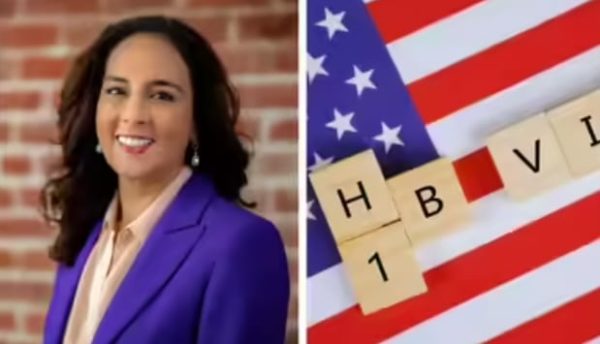
At the federal level, grassroots activism is fueling enforcement action. As recently as February 25, Assistant Attorney General for Civil Rights Harmeet Dhillon called it “deeply problematic” that federal funding flows to institutions that disproportionately hire H-1B visa workers over Americans, vowing that the Justice Department will “continue to root out this problem and protect the employment civil rights of Americans.” Dhillon’s Immigrant and Employee Rights Section (IER) is actively pursuing dozens of investigations into country-of-origin discrimination and job advertising discrimination cases. The IER enforces the anti-discrimination provisions of the Immigration and Nationality Act, which prohibit employers from favoring foreign visa workers over qualified American citizens. It operates a free worker hotline at 1-800-255-7688 for Americans who believe they have been passed over in favor of H-1B hires.
All of this demonstrates how citizen activism, armed with public federal databases, smartphone cameras, and a willingness to show up — can move policy and reshape major electoral contests. The question is whether this energy produces durable legislative reform. Texas lawmakers are expected to take up statutory guardrails on H-1B use when the legislative session resumes. The March 3 primary will test whether the worker displacement argument carries enough weight to end a 24-year Senate career. With activists in communities across the country where rapid demographic change and IT outsourcing have reshaped neighborhoods watching what happens in Texas, one conclusion is already clear: the movement Frisco crystallized shows no sign of receding.
Onward,

Kevin Lynn
Executive Director, Institute for Sound Public Policy
Founder, U.S. Tech Workers
|