|
Dear {name}:
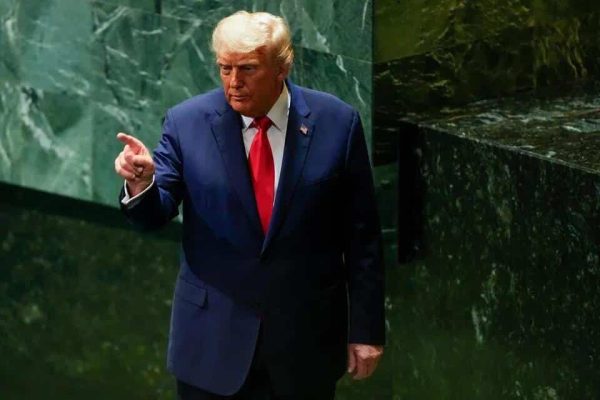
Although the proclamation made by President Trump eight days ago proved to be more sizzle than steak, as one provision after another crafted by Commerce Secretary Lutnick had to be walked back, morphed, or orphaned —it did have the positive effect of moving the Overton Window substantially to our side. And this is a big deal.
For those not familiar, the Overton Window was named after the late Joseph Overton, a political scientist who served as the senior vice president of the Mackinac Center for Public Policy. It is a political concept that describes the range of ideas and policies that are considered acceptable or mainstream in public discourse at any given time. It represents the spectrum of political possibilities that politicians can support without appearing too extreme to voters. This window shifts over time as public opinion changes. Ideas that were once considered radical or unthinkable can gradually move into the mainstream, while previously mainstream positions might become politically toxic.
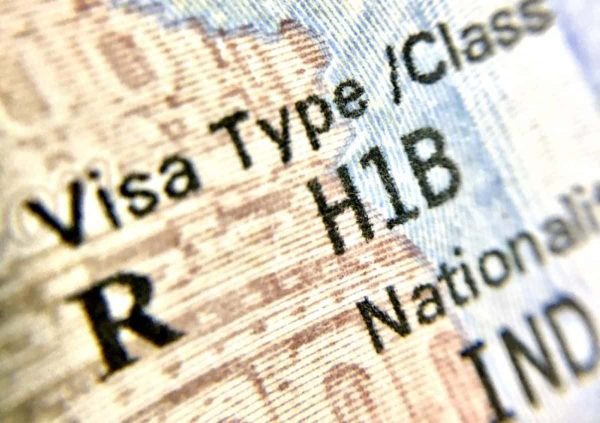
In late December 2024, during what I like to call "The Great H-1B Visa Christmas Kerfuffle," President Trump sided with Elon Musk to defend the visa program, posting on social media, "I've always liked the visas." This created a major rift between Trump and his MAGA base and influencers like Steve Bannon.
Contrast that to the President's sentiments in his proclamation on September 19th, which stated:
"The H-1B nonimmigrant visa program was created to bring temporary workers into the United States to perform additive, high-skilled functions, but it has been deliberately exploited to replace, rather than supplement, American workers with lower-paid, lower-skilled labor."
Further:
"Some employers, using practices now widely adopted by entire sectors, have abused the H-1B statute and its regulations to artificially suppress wages, resulting in a disadvantageous labor market for American citizens."
The proclamation was quite lengthy and detailed, focusing heavily on what the President characterized as systematic abuses of the H-1B program, particularly by IT outsourcing companies. It also addressed the extensive displacement of American workers in STEM fields.
In addition, both the House and Senate are on board with H-1B visa reform. Last week, Senator Jim Banks (R-IN) introduced the American Tech Workforce Act of 2025. One of the main features of the bill is that it not only ends STEM OPT but also slams the door shut on similar programs being created by any government agency. It also ends the H-1B visa lottery by prioritizing companies prepared to pay the highest salary.
Several other congressmen and senators are hard at work drafting reforms that will prevent the displacement of our white-collar professional workers by cheaper, less talented foreign workers. Even Senator Chuck Grassley (R-IA) jumped in the other day, stating in a post on X:
"DHS needs 2 stop issuing work authorizations 2 student visa holders who compete against Americans. It's in direct violation of law & puts USA at risk of tech and corporate espionage. I sent a letter 2 DHS Scty Noem asking her to end work authorizations 4 foreign student visa holders."
Since we started U.S. Tech Workers in 2018, invariably around this time every year we would find ourselves having to go to the mat to defend against bad legislation like the "Fairness for High-Skilled Immigrants Act." But not this year. That in itself feels like a victory.
Moreover, it is becoming evident that any politician claiming to be "America First" has to get good on the issue of H-1B and other employment visas and work authorizations. It is beginning to sink in all over.
In closing, many of us have been in this fight for a long time, and some a lot longer than me. We have all learned a lot. I just ask that everyone be patient with politicians and their staffers who are just getting up to speed with the employment visa issue. It's important to meet people where they are and persuade them to see the light.
Onward,

Kevin Lynn
Executive Director, Institute for Sound Public Policy
Founder, U.S. Tech Workers |