|
Dear {name},
As we near the 100-day mark of President Trump's second nonconsecutive term in office, it is a good time to sit back and reflect on what his administration has been able to accomplish. As with many things, it's a mixed bag with gratifying and disappointing moments, opportunities taken and missed.
As I discussed in a recent Substack, it is imperative the US strategically decouple from China and restore our industrial capacity and technological sovereignty. After decades of allowing China to dictate the terms of our economic relationship, we are finally reasserting control over our economic destiny, and none too soon.
On the immigration front, it was gratifying to see the administration's quick and decisive action on:
Sealing the border: The President's reinstating of the Remain in Mexico policy, deploying troops to the border, and reverse engineering the CBP One app have had a lot to do with dropping border encounters to historic lows.
Ending the Biden Administration Parole Programs: Last year I wrote in a piece published by Newsweek on how the Biden administration's unauthorized use of parole allowed more than 211,000 Haitians to enter through an initiative dubbed Process for Cubans, Haitians, Nicaraguans, and Venezuelans parole program (CHNV). Parole was intended to be granted by the president on a case-by-case basis. It was never intended to be granted to hundreds of thousands of foreigners in one fell swoop. Moreover, foreigners paroled into the country are granted work permits. And under certain legal statuses, the CHNV program allows an immigrant who is already in the U.S. to potentially sponsor another immigrant.
Ending Temporary Protected Status (TPS) for Select Nations: The administration is taking action to roll back TPS for nations in which the extenuating circumstances have ended, i.e., the country has recovered from a natural disaster or civil or war with another country has ended, etc. The administration will be winding down TPS for Haiti and Venezuela, and it appears the same is in store for Afghanistan.
Although the administration has been quick to strike at illegal immigration, even going to the extent of invoking the Alien and Sedition Act to assist its efforts in rooting out foreign gang members and transnational terrorists, it has done little to mitigate the harmful impacts of legal immigration.
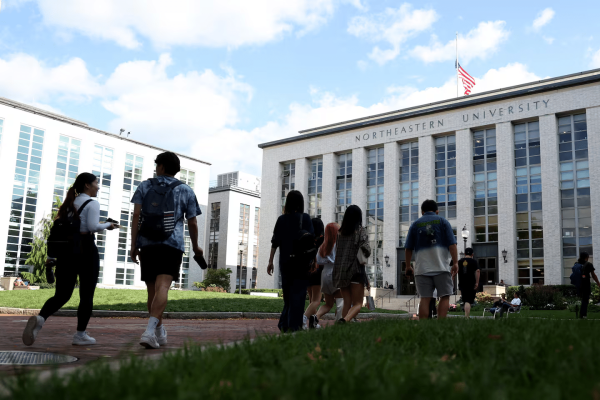
Whether a foreigner is in the country illegally or legally, they are impacting the native workforce. This is true of seasonal workers here on an H-2B visa or white-collar workers here on an H-1B visa and STEM Optional Practical Training (OPT). Despite massive layoffs over the past few years, the administration has done nothing in its first 100 days to decrease the number of H-1B visa workers who will be arriving next fiscal year. A record number of foreign students are arriving, lured here by the prospect of a work authorization document via STEM OPT, OPT, and Curricular Practical Training. India, with more than 330,000, followed by China, with roughly 270,000 students, represent the two largest countries sending their people to study in the US.
Moreover, President Trump and Indian Prime Minister Narendra Modi’s first meeting and the subsequent joint statement released in February recognized how the “300,000 strong Indian student community contributes over $8 billion annually to the U.S. economy and helped create a number of direct and indirect jobs,” and “both leaders resolved to strengthen collaborations between the higher education institutions through efforts such as joint/dual degree and twinning programs, establishing joint Centers of Excellence, and setting up of offshore campuses of premier educational institutions of the U.S. in India.” In other words, more immigration from India through American universities and diploma mills and more offshoring of jobs and intellectual property to India through American universities and diploma mills. None of this puts Americans first.
In closing, are there things that have disappointed me about the first 100 days? YES. But on balance, I am pleased with the progress, and any disappointment I may have is tempered by the knowledge that it is still early in the administration and there are still many key appointments to be made. President Trump may very well be the hardest-working executive to ever inhabit the Oval Office. To date, he has signed 137 executive orders on a wide range of topics and has had to face an unprecedented 79 injunctions (TROs, preliminary injunctions, and nationwide injunctions) as an out-of-control judiciary has attempted to thwart many of his initiatives. And this is only the first 100 days.
Onward,

Kevin Lynn
Executive Director, Institute for Sound Public Policy
Founder, U.S. Tech Workers |